For a North Carolina homeowner, the backyard is more than just a patch of grass—it is an extension of the home. However, with the rapid development in cities like Lexington, Winston-Salem, and High Point, “privacy” is becoming a luxury. Whether you are trying to block out a new multi-story development, muffle the sound of traffic, or simply create a serene sanctuary, choosing the best privacy trees for North Carolina is a high-stakes decision.
The NC climate is notoriously fickle. We sit in a “transition zone” where Northern cold meets Southern humidity. To build a living wall that doesn’t just survive but thrives, you need a strategy that accounts for red clay, humidity, and summer droughts.
In this definitive guide, we will break down the top species, the science of soil, and why professional landscaping services are the secret to a screen that lasts for decades.
Part 1: Navigating the North Carolina Climate and Soil
Before you plant, you must understand the environment. North Carolina is divided into three distinct regions, but the Piedmont—where we primarily operate—presents the most unique challenges for privacy trees in the NC climate.
The “Red Clay” Factor
If you live in the Piedmont, you are likely dealing with heavy, acidic red clay. While clay is nutrient-rich, it is incredibly dense. During a rainy spring, clay holds water like a bathtub, which can lead to root rot. During a hot July, it bakes into a brick, suffocating roots. Successful privacy tree installation in NC requires breaking through this “hardpan” and ensuring proper drainage.
USDA Hardiness Zones
North Carolina spans Zones 6a through 8b. Most of the Piedmont falls into 7b or 8a. This means your trees must be able to withstand overnight lows of 5°F to 10°F while also handling weeks of 90°F+ humidity in the summer.
Part 2: Top Species for NC Privacy Screens
Not all evergreens are created equal. Here are the top-performing species specifically vetted for the North Carolina landscape.
1. Thuja ‘Green Giant’ (The Gold Standard)
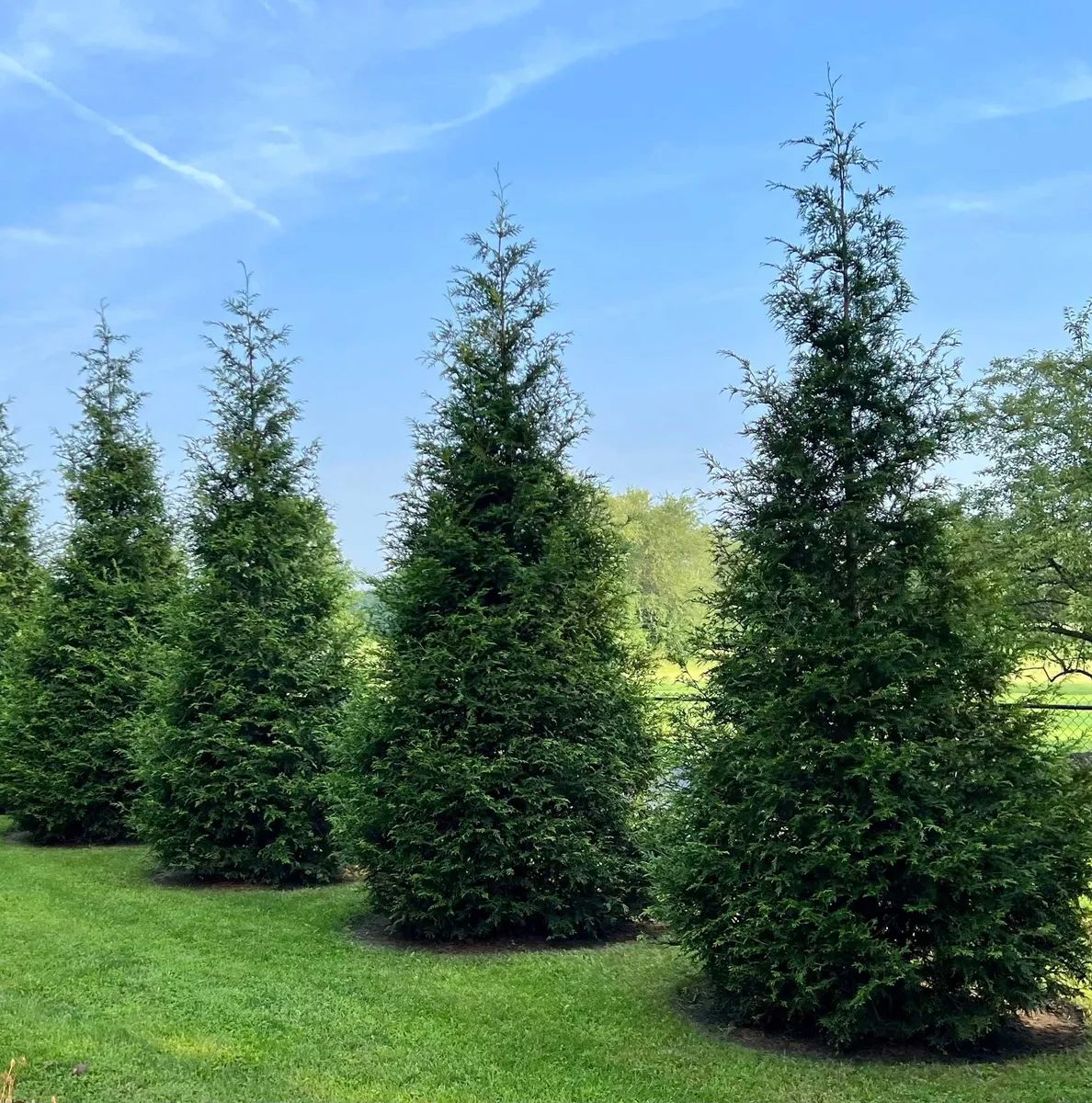
If you want height fast, the Green Giant is the undisputed king. It can grow up to 3 to 5 feet per year under the right conditions.
- NC Performance: Unlike the “Leyland Cypress,” which can be prone to disease in high humidity, the Green Giant is remarkably resilient. It handles the Piedmont’s clay soil better than almost any other needle evergreen.
- Best Use: Large perimeter screens where you need 30+ feet of height.
- Selection Tip: Use our tree species selection guide to determine if your lot has the width to accommodate its 15-foot mature spread.
2. Nellie R. Stevens Holly (The Living Wall)
For homeowners who want a dense, “impenetrable” hedge, the Nellie R. Stevens is the go-to choice.
- NC Performance: This holly thrives in heat. Its thick, waxy leaves prevent moisture loss during droughts. Plus, it produces beautiful red berries in the winter that attract native NC birds.
- Maintenance: It responds exceptionally well to tree trimming, allowing you to keep it as a formal rectangular wall or a natural pyramid.
3. Cryptomeria Japonica ‘Yoshino’
Often called the Japanese Cedar, this tree offers a softer, more “ornamental” look than traditional arborvitae.
- NC Performance: Cryptomeria is highly resistant to the bagworms that often plague other NC evergreens. It also features a stunning bronze tint in the winter, adding seasonal interest to your landscape.
Part 3: The Critical Role of Sunlight and Site Prep
You can buy the most expensive tree in the nursery, but if you put a sun-loving Thuja in the deep shade of an old Oak, it will thin out and eventually fail.
The Sunlight Evaluation
Before digging, we perform a sunlight evaluation. Most privacy trees require “Full Sun” (at least 6 hours of direct light). If your yard is shaded by large hardwoods, you may need to consider shade-tolerant species like the American Holly or Skip Laurel.
Clearing the Way
Often, to make room for a new, healthy privacy screen, old or diseased trees must be cleared to create proper space for planting. This ensures your new screen isn’t competing with invasive species or dying hardwoods for nutrients. After clearing, we highly recommend stump grinding to ensure the soil is ready for your new evergreens’ root systems.
Part 4: Technical Installation: The Piedmont Method
How you plant is just as important as what you plant. At Piedmont Privacy Trees, we follow a rigorous protocol to beat the NC clay.
1. The Wide-Hole Strategy
In clay soil, we dig holes twice as wide as the root ball. This creates a “soft zone” of amended soil that allows young roots to establish quickly before they have to fight the dense native clay.
2. High Planting
We plant our trees “proud”—meaning the top of the root ball sits 1–2 inches above the soil line. This prevents water from pooling around the trunk and causing “collar rot,” a common killer of NC evergreens.
3. Proper Spacing
Overcrowding is the #1 cause of fungal issues like Seiridium Canker. We calculate spacing based on the tree’s mature width to ensure air can circulate between the branches, even 10 years down the line.
Part 5: Transplanting and Saving Existing Trees
Sometimes, you don’t need a new tree; you just need your current tree in a better spot. If you are remodeling your home or expanding your driveway, tree transplanting is a sustainable way to keep your established greenery while changing your landscape’s layout.
Transplanting in the NC climate is best done in late fall or early spring when the tree is dormant. This minimizes “transplant shock” and gives the roots time to settle before the intense summer heat arrives.
Part 6: Long-Term Maintenance and Care
A privacy screen is a living investment. To keep it looking its best, a regular maintenance schedule is required.
Pruning and Trimming
Regular tree trimming isn’t just about aesthetics; it’s about health. By removing dead or crossing branches, you allow more light to reach the interior of the tree, preventing the “hollow” look that often ruins old hedges.
Fertilization and Mulching
NC soils are often depleted of organic matter. We recommend a 3-inch layer of hardwood mulch to regulate soil temperature and retain moisture. However, never let mulch touch the bark of the tree (the “mulch volcano”), as this can invite pests and rot.
Part 7: Why Local Expertise Matters
When you search for the best privacy trees for North Carolina, you will find plenty of big-box stores selling generic trees. However, those trees are often grown in different climates and aren’t acclimated to the specific humidity and soil of the Piedmont.
By working with a local specialist, you get:
- Acclimated Stock: Trees that are already used to NC weather.
- Precision Placement: Using sunlight evaluation to ensure survival.
- Full-Service Care: From stump grinding to the final landscaping services.
Conclusion: Build Your Sanctuary Today
Creating privacy in your North Carolina yard is a journey that starts with the right knowledge. By selecting the correct species for the NC climate, preparing your soil properly, and committing to long-term care, you can transform a fishbowl backyard into a private retreat.
Whether you need a full privacy tree installation or help clearing and preparing your property for new planting, we are here to help.
Ready to start your project?
- Step 1: Browse our tree species selection.
- Step 2: Schedule your sunlight evaluation.
- Step 3: Contact Piedmont Privacy Trees for a professional consultation.
FAQ: Privacy Trees in North Carolina
Q: What is the fastest-growing privacy tree in NC? A: The Thuja Green Giant is the fastest, often growing 3–5 feet per year once established in Piedmont clay.
Q: Can I plant privacy trees in the summer? A: It is possible, but not recommended. The heat of an NC July puts extreme stress on new roots. Fall and early spring are the ideal planting windows.
Q: How do I stop my Leyland Cypress from turning brown? A: This is often caused by fungus or drought stress. Proper tree trimming to improve airflow and deep watering during droughts are the best preventatives.