What Lexington, NC Homeowners Need to Know Before Planting Privacy Trees
USDA Hardiness Zone 7b–8a (Lexington, NC)
Lexington, North Carolina sits in a transitional Piedmont climate where warm, humid summers meet mild winters. Most of the area falls in Zone 7b, with occasional pockets of 8a in protected or urban areas.
This matters more than most homeowners realize. Heat stress, clay-heavy soils, and deer pressure are the real limiting factors here—not extreme cold like in mountain regions.
Lexington sits between Greensboro and Charlotte in the North Carolina Piedmont, where red clay soils, summer humidity, and rapid suburban development all affect how privacy trees establish.
Planting without considering these conditions often leads to slow growth, thinning screens, or trees that fail within the first few summers.
Lexington’s Growing Conditions (Why Trees Succeed or Fail Here)
Lexington isn’t difficult for planting—but it is specific.
- Hot, humid summers regularly push 90°F+ with high humidity stress
- Clay-heavy Piedmont soils that can compact and drain slowly
- Moderate to high deer pressure in residential edges and wooded lots
- Occasional drought periods in late summer despite overall rainfall
The biggest mistake homeowners make here is choosing trees based on colder-climate advice or fast-growing hype species that don’t tolerate heat and clay soils.
Hardiness + Site Conditions Summary
7b–8a
Winter lows typically 10–20°F, rare hard freezes
~44–48 inches
Reliable overall, but summer dry spells still occur
Red clay / loam mix
Can compact easily; drainage varies by lot
Moderate to High
Especially on wooded-edge and suburban transition lots
The Trees That Actually Thrive in Lexington, NC
These are proven performers for Davidson County conditions—heat-tolerant, clay-adapted, and widely used in real installations.
Thuja Green Giant
Thuja plicata × standishii
Still the most reliable fast privacy tree for Lexington, NC when planted correctly. Handles heat, humidity, and clay soil better than most evergreens and forms a dense privacy wall quickly.
Best performance comes with proper spacing and early irrigation during establishment.
- Growth rate: 3–5 ft/year
- Mature height: 30–40 ft
- Spacing: 5–6 ft apart
- Zone: 5–9
- Deer resistance: Moderate to High
Cryptomeria ‘Yoshino’
Cryptomeria japonica ‘Yoshino’
One of the best all-around privacy trees for the NC Piedmont. Handles humidity extremely well and avoids many pest issues that affect arborvitae.
Soft texture, fast growth, and excellent long-term durability in clay soils.
- Growth rate: 2–3 ft/year
- Mature height: 30–40 ft
- Spacing: 8–10 ft apart
- Zone: 6–9
- Deer resistance: Moderate
Eastern Red Cedar
Juniperus virginiana
A native powerhouse for tough Lexington sites. Thrives in poor clay soil, handles drought, and is extremely long-lived once established.
Best for rural edges, large lots, and naturalized privacy screens.
- Growth rate: 1–2 ft/year
- Mature height: 40–50 ft
- Spacing: 6–8 ft apart
- Zone: 2–9
- Deer resistance: Very High
Nellie Stevens Holly
Ilex × ‘Nellie R. Stevens’
Excellent for layered privacy screens in suburban Lexington neighborhoods. Handles clay soil, provides year-round coverage, and naturally resists deer browsing due to its foliage texture.
Works especially well under taller evergreens or along fences.
- Growth rate: 2–3 ft/year
- Mature height: 15–25 ft
- Spacing: 5–8 ft apart
- Zone: 6–9
- Deer resistance: High
American Holly
Ilex opaca
A native evergreen that performs well in Lexington’s climate and blends naturally into Piedmont landscapes. Slower growing but extremely durable and long-lived.
Great for natural property boundaries.
- Growth rate: ~1 ft/year
- Mature height: 15–30 ft
- Spacing: 8–10 ft apart
- Zone: 5–9
- Deer resistance: High
Why Deer Pressure Matters in Lexington, NC
Davidson County sits in a transition zone between suburban neighborhoods and wooded rural land. That creates ideal deer habitat—and predictable browsing pressure on new plantings.
New privacy trees are especially vulnerable in the first 1–2 years.
Best defense is species selection first, not just fencing or sprays.
- Thuja Green Giant: generally safe with minimal browsing
- Cryptomeria: occasional browsing when young
- Hollies: strongest natural deterrent
- Arborvitae varieties: high risk in unprotected areas
Common Privacy Tree Mistakes in Lexington, NC
1. Planting Leyland Cypress everywhere
Still popular, but struggles long-term in NC humidity and pest pressure compared to newer alternatives.
2. Ignoring clay soil drainage
Poor drainage is one of the biggest silent killers of privacy trees in the Piedmont.
3. Overcrowding trees
Too-tight spacing leads to weak air circulation and fungal issues in humid summers.
4. Skipping early watering routines
First summer establishment watering is critical—especially during heat spikes.
5. Choosing trees based only on speed
Fast growth without heat tolerance often leads to failure in 3–5 years.
Best Planting Times in Lexington, NC
Sept–Nov: ideal root establishment before summer heat
March–May: strong growth season, but heat stress risk starts early
Possible with strict irrigation schedule
Generally fine, but growth pauses
Spacing Guide for Lexington Properties
Rural / Large Lots (Davidson County outskirts)
- Double staggered rows for maximum privacy
- 8–10 ft spacing between trees
- Strong wind buffering for open land
Suburban Neighborhoods (Lexington city limits)
- Single row planting at 5–6 ft spacing
- Focus on vertical privacy screens along fences
- Layering with hollies for lower coverage
What Our Lexington Privacy Tree Service Includes
- On-site evaluation of soil, sun, drainage, and deer pressure
- Proper spacing and layout design
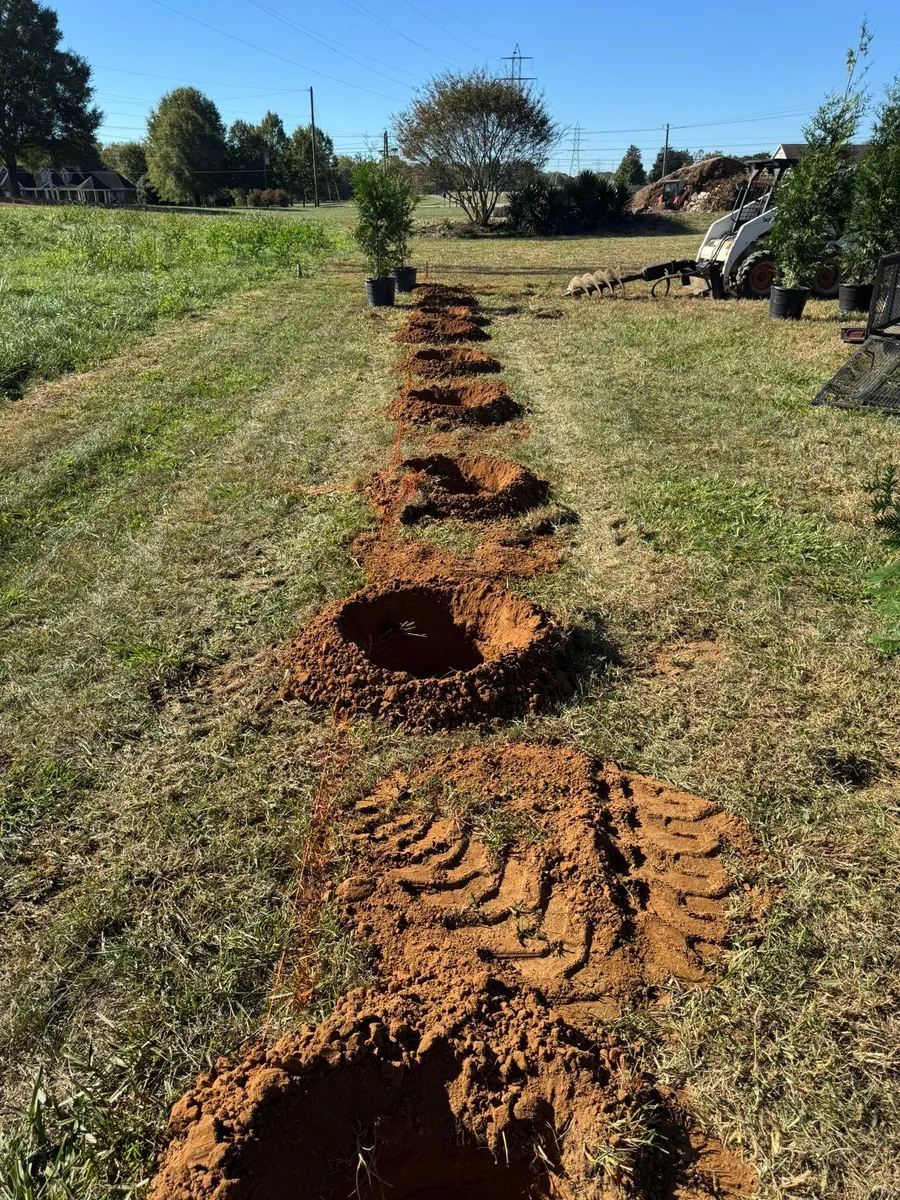
- Professional planting at correct depth (root flare exposed)
- Mulching and initial deep watering
- Establishment care instructions
- Optional deer protection setup
Frequently Asked Questions
How much does privacy tree installation cost in Lexington, NC?
Most installed privacy trees range from $80–$150 per tree, depending on size, site conditions, and layout complexity.What is the best fast privacy tree for North Carolina?
Thuja Green Giant and Cryptomeria ‘Yoshino’ are the top performers for Lexington’s climate.Do deer really eat privacy trees here?
Yes—especially arborvitae and young plantings. Species selection is the first line of defense.
Plant Once. Get It Right.
Piedmont Privacy Trees helps Lexington, NC homeowners design and install privacy screens built for the realities of the North Carolina Piedmont—heat, clay soil, and deer pressure included.