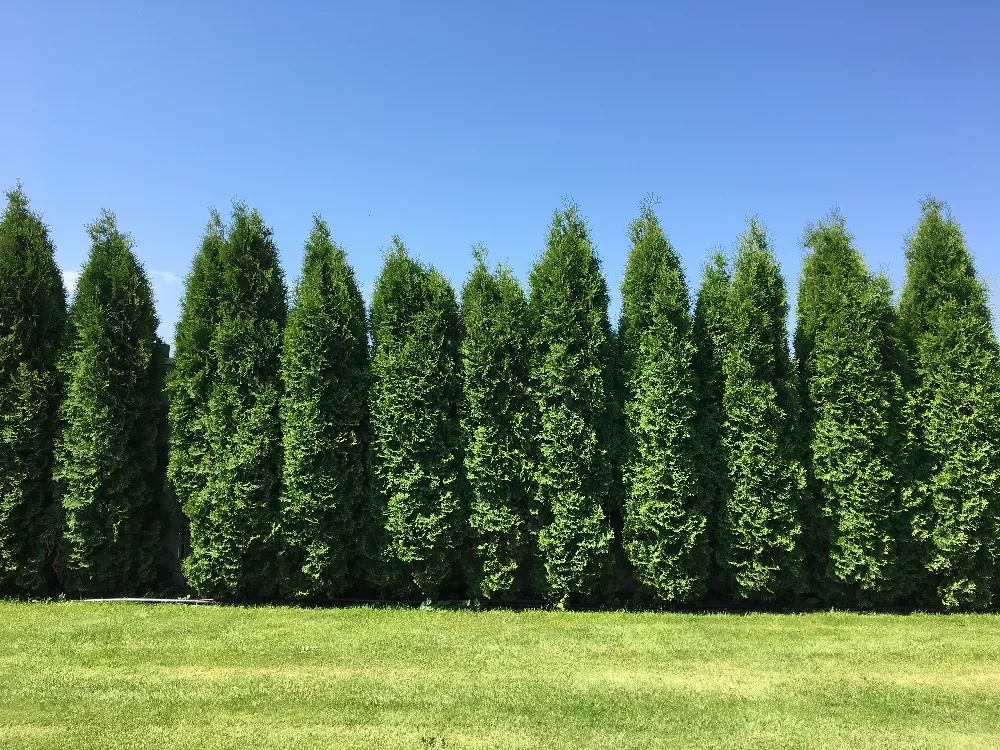
Creating a “living wall” is one of the most rewarding home improvement projects you can undertake in the North Carolina Piedmont. Unlike a wooden fence that begins to weather and rot the moment it is installed, a privacy screen made of trees is a growing asset that increases your property value, muffles street noise, and provides a lush backdrop for your outdoor life.
However, a successful screen requires more than just lining up trees. In the NC red clay and humid climate, precision is the difference between a dense, evergreen barrier and a row of struggling saplings. This guide will walk you through the professional process of how to plant privacy trees, with a specific focus on privacy tree row spacing NC standards to ensure your screen closes quickly and stays healthy for decades.
Phase 1: Planning and Species Selection
Before you pick up a shovel, you must decide which “architect” will build your wall. In the Lexington and Salisbury areas, three species dominate the landscape for good reason.
1. The Heavy Hitters
- Green Giant Arborvitae: The gold standard. These are fast growers (3–5 feet per year) and are highly resistant to the pests that plague other evergreens.
- Nellie R. Stevens Holly: If you want a “prickly” deterrent that also provides beautiful red berries in the winter, this is your tree. It is incredibly drought-tolerant once established.
- Leyland Cypress: A classic choice for rapid height, though it requires more frequent tree trimming to prevent it from becoming “thin” at the bottom.
2. The Sunlight Evaluation
North Carolina sun is intense. Before buying, perform a sunlight evaluation of your planting line.
- Full Sun (6+ hours): Ideal for almost all privacy evergreens.
- Partial Shade: Consider Emerald Green Arborvitae or Skip Laurel, as Green Giants may thin out without enough light.
Phase 2: Mastering Privacy Tree Row Spacing NC
Spacing is where most DIY projects fail. If you plant too far apart, you’ll wait a decade for privacy. If you plant too close, the trees will compete for nutrients and eventually die from lack of airflow.
The Single Row vs. Staggered Row
- Single Row: Best for tight spaces or narrow side yards.
- Spacing: Plant Green Giants 5–6 feet apart (center-to-center).
- Double Staggered Row: The professional choice for maximum “instant” privacy and sound dampening. You create two parallel rows and offset the trees in a “W” pattern.
- Spacing: Rows should be 6–8 feet apart, with trees spaced 8–10 feet apart within each row. This allows each tree to have its own “breathing room” while the foliage overlaps to create an impenetrable wall.
Phase 3: Step-by-Step Installation
Step 1: Site Preparation
Clear the line of any old brush. If you have old stumps from previous trees, professional stump grinding is mandatory. New roots cannot penetrate old, decaying hardwood stumps.
Step 2: Digging the “NC Way”
Our red clay is dense. Never dig a deep, narrow hole—this creates a “clay pot” effect that drowns roots.
- The Hole: Dig 2–3 times wider than the root ball, but no deeper.
- The Depth: The “root flare” (where the trunk meets the roots) must sit 1–2 inches above the soil line. In NC, it is always better to plant a tree a little too high than a little too deep.
Step 3: Amending and Backfilling
While you should use mostly native soil to encourage the tree to adapt, mixing in 20% organic compost can help break up the clay. As you backfill, stop halfway and fill the hole with water to settle the soil and eliminate air pockets—this is more effective than “tamping” down with your feet, which compacts the clay.
Step 4: Mulching (The “Donut,” Not the “Volcano”)
Apply 3 inches of hardwood mulch or pine straw around the base. Crucial: Keep the mulch 4 inches away from the trunk. “Volcano mulching” (piling mulch against the bark) causes rot and invites pests.
Phase 4: Troubleshooting Common NC Privacy Tree Pests & Diseases
In the North Carolina Piedmont, a privacy screen is a significant investment. However, the high humidity and fluctuating temperatures of the Lexington and Salisbury areas can create a breeding ground for specific pests and pathogens.
1. The Silent Defoliator: Bagworms
If you notice small, spindle-shaped “cones” hanging from your Green Giant Arborvitae or Leyland Cypress, you aren’t looking at natural seed pods. You are looking at Bagworms.
- The Threat: These caterpillars live inside silk bags camouflaged with needles. In the Piedmont, they hatch in late May to early June and can strip a 10-foot tree of its foliage in a single season.
- The NC Solution: * Manual Removal: Hand-pick them in the winter and burn them.
- Biorational Sprays: In early June, use Bacillus thuringiensis (Bt), a natural bacteria that kills the larvae without harming beneficial local pollinators.
2. The Humidity Hazard: Seiridium Canker
This is the number one reason Leyland Cypress trees fail in North Carolina. It is a fungal disease that thrives in the “wet heat” of the NC summer.
- Identification: Look for individual branches (called “flags”) turning bright reddish-brown while the rest of the tree stays green.
- The NC Solution: There is no chemical cure for Canker. The only way to stop it is to prune the infected branch 6 inches below the site of the infection.
- Prevention: Proper privacy tree row spacing NC is your best defense. Airflow is the “natural fungicide” of the Piedmont.
Phase 5: The First 12 Months of Maintenance
A newly installed privacy screen is on “life support” for its first year.
- Watering: In the Piedmont, you must water deeply 2–3 times a week during the summer. One “deep soak” is better than five “light sprinkles.”
- Fertilization: Wait until the second growing season to apply heavy fertilizer. Let the roots establish themselves first.
- Monitoring: Keep an eye out for pests, which can move quickly through a dense row of trees. Professional tree trimming can help maintain health.
Why Professional Installation Wins
Installing 20 or 30 large-scale trees is a massive physical and financial undertaking. At Piedmont Privacy Trees, we handle the heavy lifting—from tree removal of old obstructions to the final privacy tree installation.
We ensure your privacy tree row spacing NC is calculated perfectly for your specific lot, giving you the fastest possible “green wall” with the lowest risk of tree loss.